
WHICH IS IT, LIFEWISE?
Does the wall between church and state matter when it limits your access to public-school children—or ONLY when it protects you from public accountability?
🧱🧱🧱🧱🧱🧱🧱🧱🧱🧱🧱🧱🧱🧱🧱🧱🧱🧱🧱
Because LifeWise Academy is trying to have it both ways.
When LifeWise wants access to students, the wall between church and state is treated as practically nonexistent. Public schools are expected to build released-time religious instruction into the school day. Administrators and teachers coordinate schedules, permission, attendance, departures and returns. Children lose publicly funded art, music, PE, computer class, library, lunch or recess.
👀 In 2025, the USDA changed federal policy to allow schools to prepare federally reimbursed meals for students to take off-site to released-time religious instruction. In some communities, public land, facilities, utilities or vehicles have been made available. District employees and lawyers spend public time writing policies, reviewing agreements and responding to disputes.
LifeWise calls its program “privately funded,” but those costs do not appear on LifeWise’s books. The public absorbs them. And LifeWise accepts that public assistance without hesitation.
🚩 But when a government agency attempts to investigate LifeWise? 🚩
Suddenly, the wall between church and state is sacred.
Suddenly, LifeWise is an untouchable religious ministry.
⛔ Government must stay out. Even asking questions about its conduct threatens the Constitution. ⛔
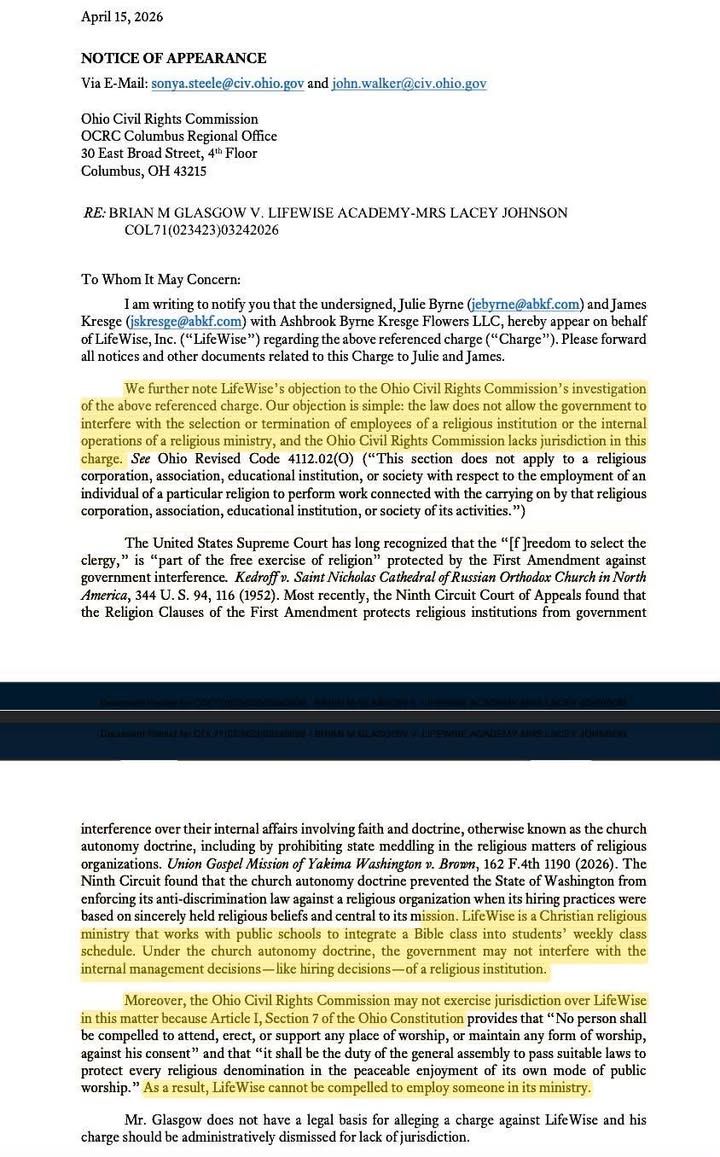
That is not our interpretation. LifeWise’s own attorneys put the contradiction in writing. Responding to a religious-discrimination complaint in Ohio, they described LifeWise as a Christian ministry that “works with public schools to integrate a Bible class into students’ weekly class schedule.” Then, in the very next sentence, they argued that government may not interfere with LifeWise’s internal hiring decisions.
LifeWise wants integration when integration gives it access.
It wants separation when separation shields it from accountability.
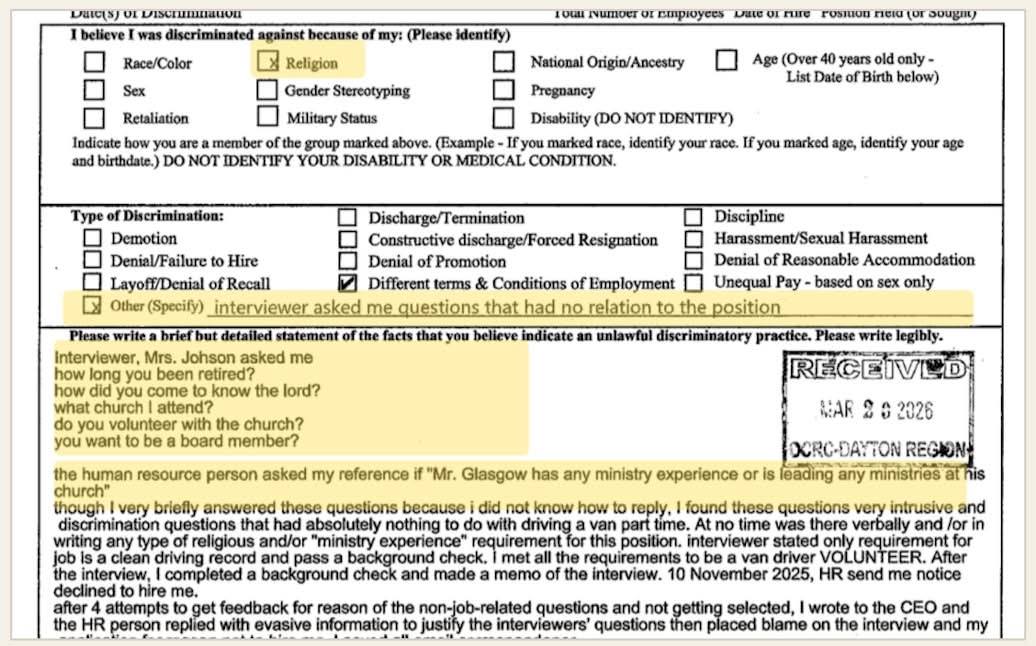
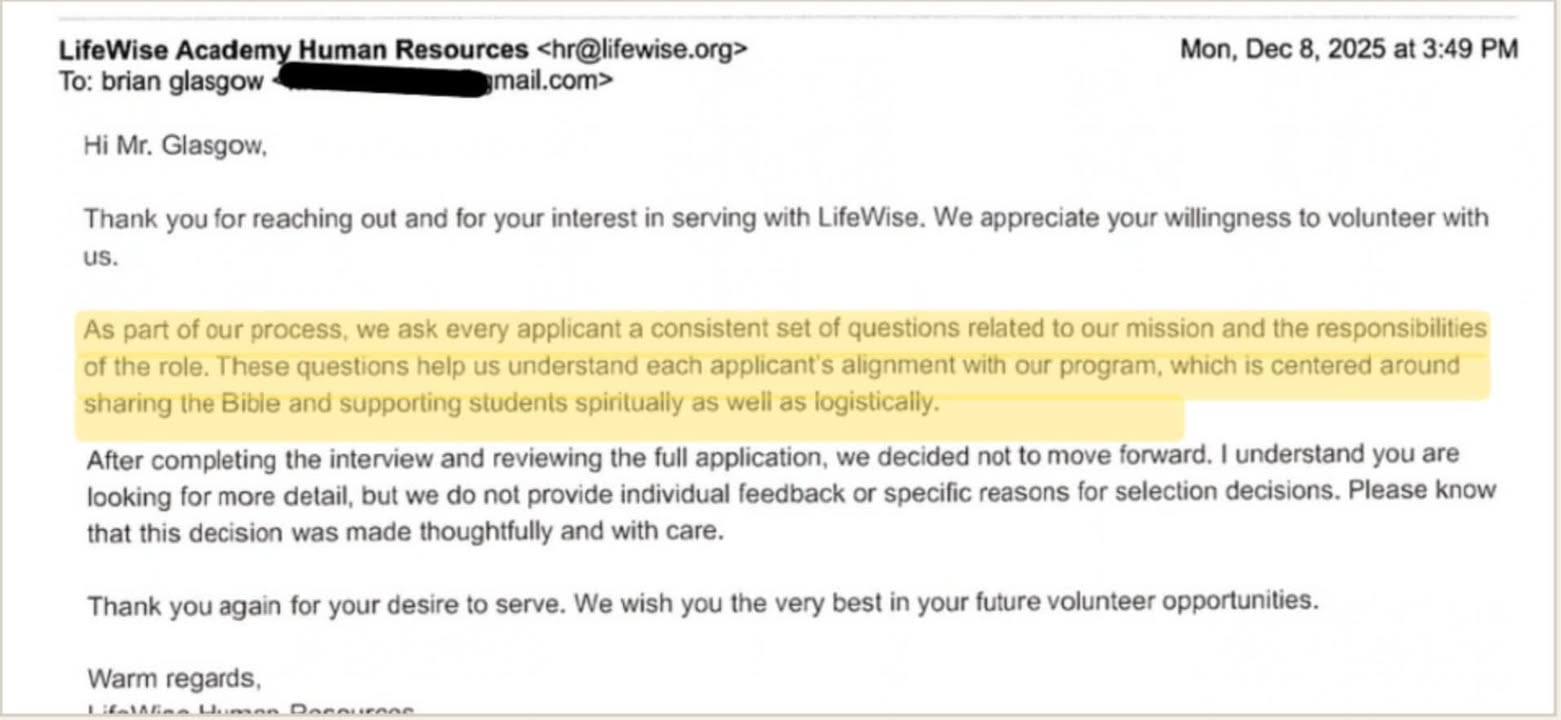
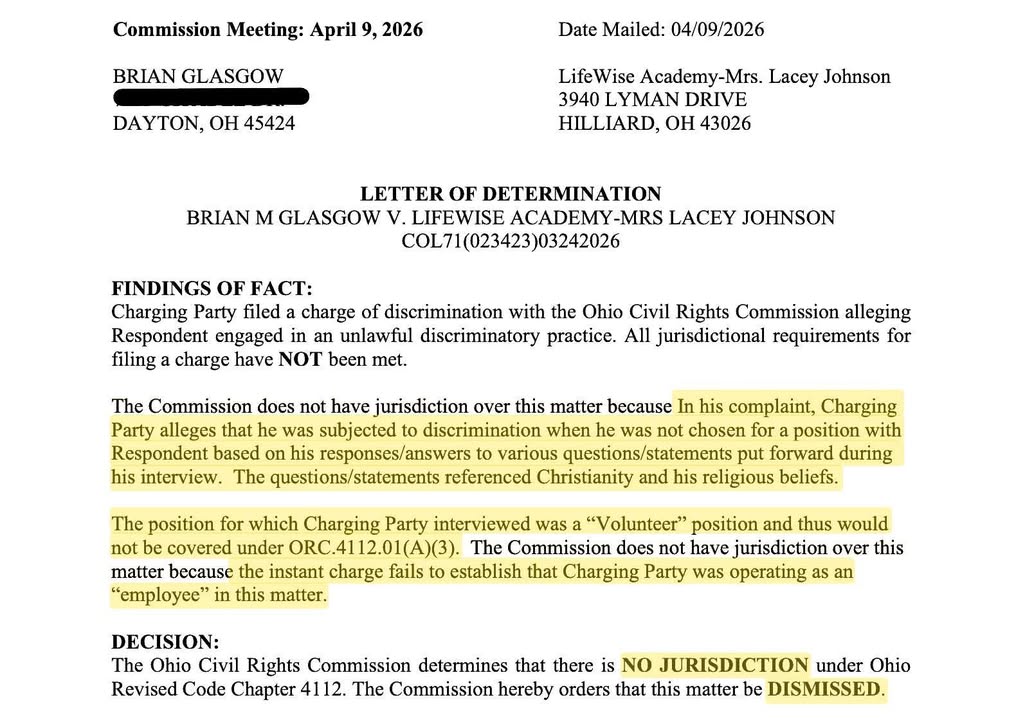
Brian Glasgow alleged that LifeWise rejected him for an unpaid van-driver position after requiring a pastoral reference and questioning him about accepting Jesus, church attendance, church service and ministry experience. LifeWise’s attorneys formally objected to the civil-rights investigation. They invoked Ohio’s religious-employer exemption, the First Amendment’s church-autonomy doctrine and the Ohio Constitution. They argued that government could not interfere with the selection of workers or the internal operations of LifeWise’s ministry.
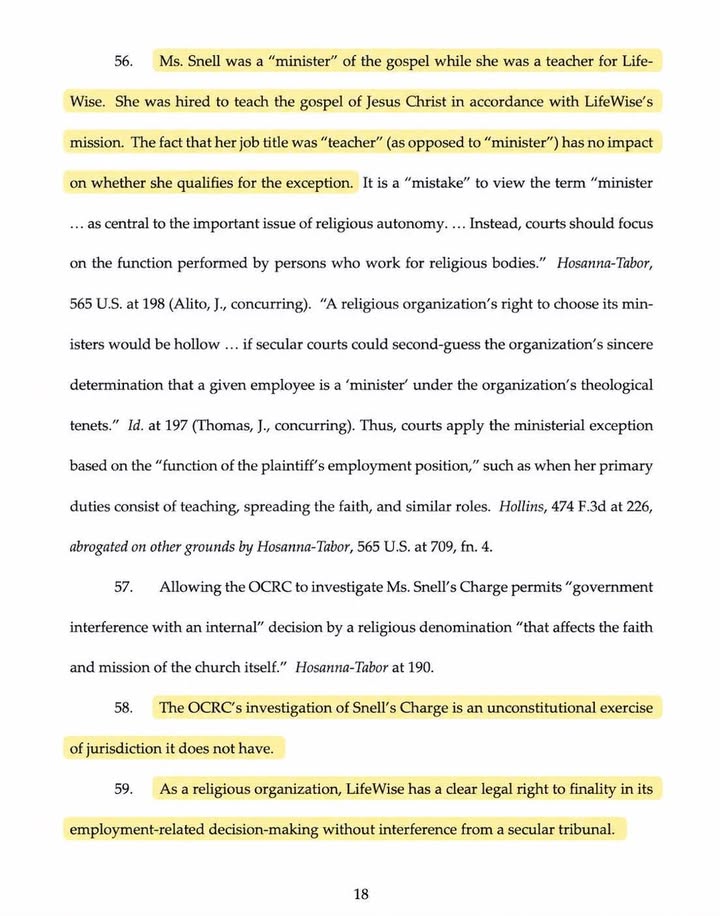
When paid LifeWise teacher Rachel Snell filed an age-discrimination complaint, LifeWise used the same fundamental defense. It sued the Ohio Civil Rights Commission to stop the investigation, characterized Snell as a minister and argued that secular government had no authority to examine its employment decisions.
Different workers. Different allegations. Same defense: We are a religious ministry. Government must stay out.
But government is apparently welcome when its schools provide access, its employees manage the logistics, its students surrender educational time and its taxpayers absorb the surrounding costs. Which is it?
Is LifeWise a private religious ministry so separate from government that a civil-rights agency cannot investigate it?
Or is it entitled to have government institutions across the country rearrange their school days and devote public resources to help that ministry reach children?
LifeWise will say these are separate legal doctrines.
Technically, they are.
But the structure LifeWise is demanding could not be clearer:
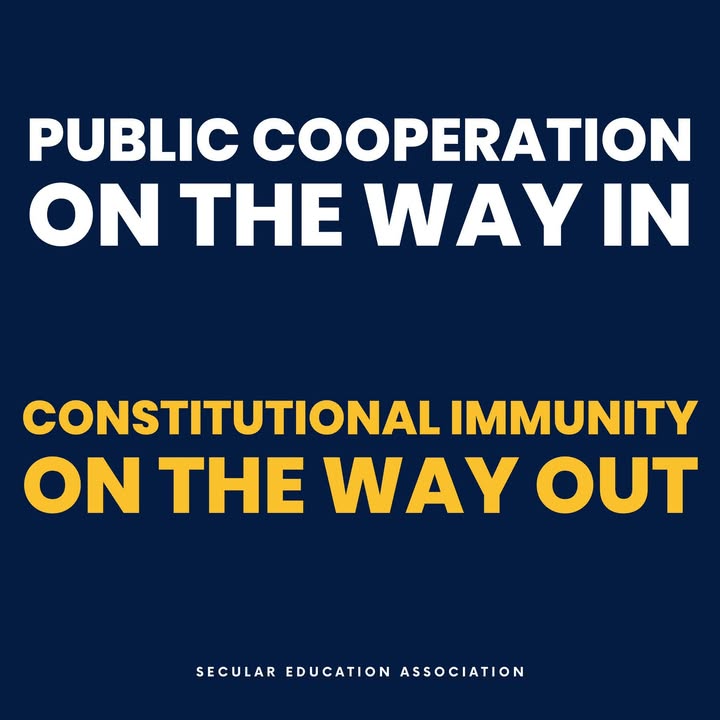
👉 Public cooperation on the way in.
👈 Constitutional immunity on the way out.
These complaints happened in Ohio. But they expose the national playbook. LifeWise wants the wall between church and state lowered when it wants access to our children—and raised the moment the public demands answers.
That is not religious freedom. That is constitutional opportunism. Our public schools are not LifeWise’s mission field. Our teachers and administrators are not its support staff. Our tax dollars are not its subsidy. And our Constitution is not an escape hatch for a ministry demanding public cooperation without public responsibility.
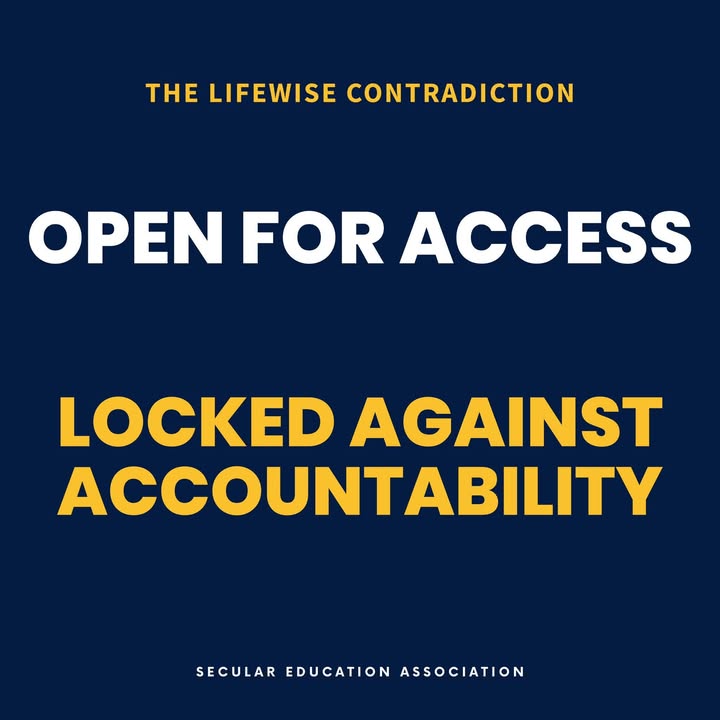
LifeWise is not defending the wall between church and state. It is demanding control of the gate—open for access and locked against accountability.
LifeWise does not get to wipe its ass with the Constitution on the way into our schools—and then wave it like sacred scripture when someone comes asking questions.
Public schools, statehouses, legislators and parents across America need to understand exactly what LifeWise is asking for—and stop handing it the keys.
What people are saying:
- Secular Education Association: You can find the full public records file about the investigation from OCRC here 👇
https://drive.google.com/file/d/16n8HIZR_xpXpJZRah9TMjEnW8-x6jTzf/view?usp=drivesdk
Leave a Reply